Published on 22 September 2026 · 4 min read
Why the same kamado has three different prices
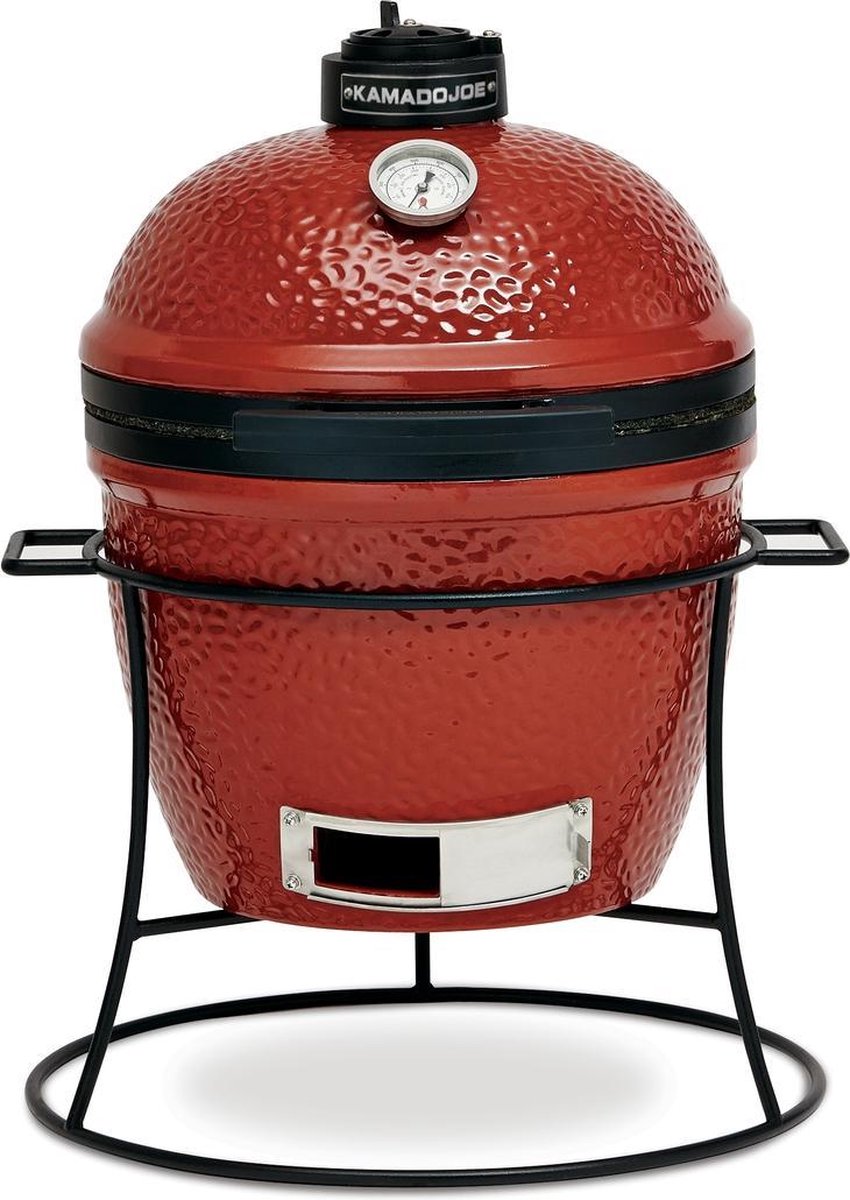
You find a Kamado Joe Joe Jr. for 449 euros and the same Joe Jr. for 604. Neither shop is doing anything wrong: these are two products with two barcodes. The difference is the stand, and that is exactly the cost that never appears clearly in the product name.
A kamado is a sphere, not a barbecue
What you buy is ceramic: a dome and a base with a hinge between them. To cook at working height you need a frame, and to move it you need wheels. At many brands both are separate items.
That frame is not a detail. Reckon on two to four hundred euros, and more at the premium brands. A ticket that looks a hundred euros lower can in reality come out three hundred higher.
The words to watch for
There is no agreed standard, but the brands do keep using the same terms. Once you recognise them, you read a product name differently.
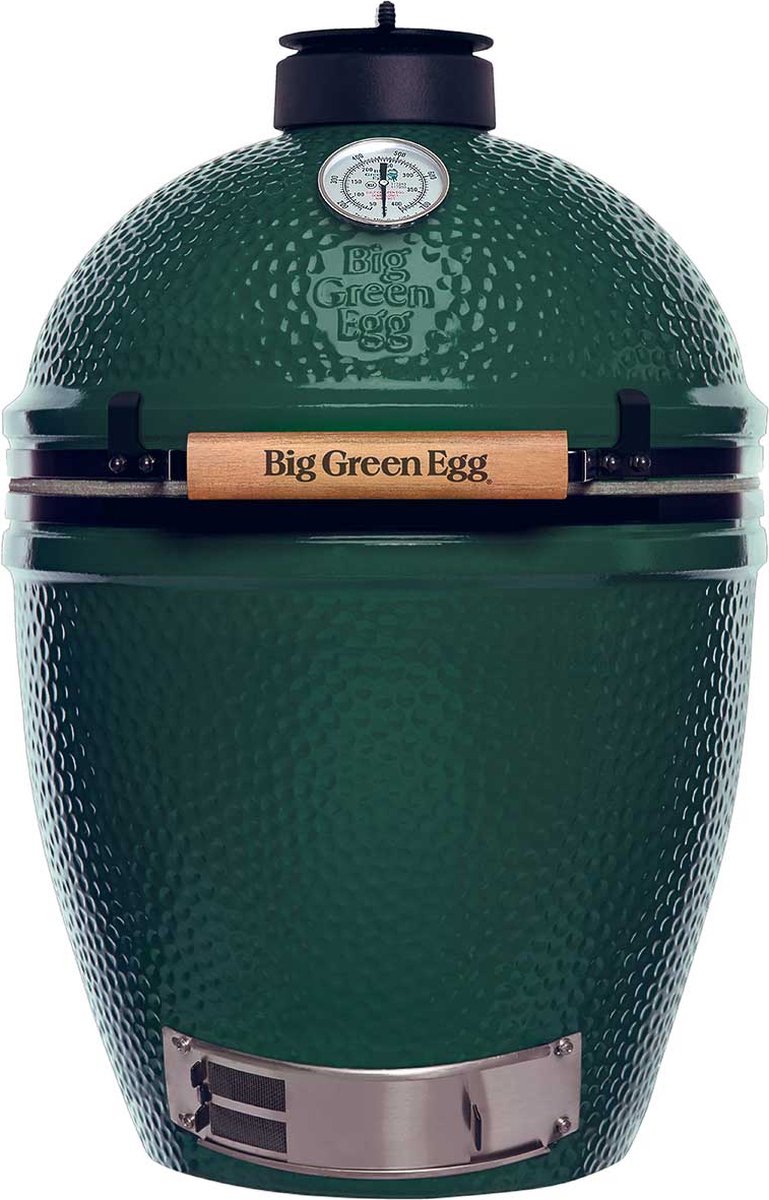
If it says nothing at all, assume the stand is not included. That is the rule at Big Green Egg, and that brand sells more of this category than anyone.
- Solo, Stand-Alone, “without stand”: the ceramic only.
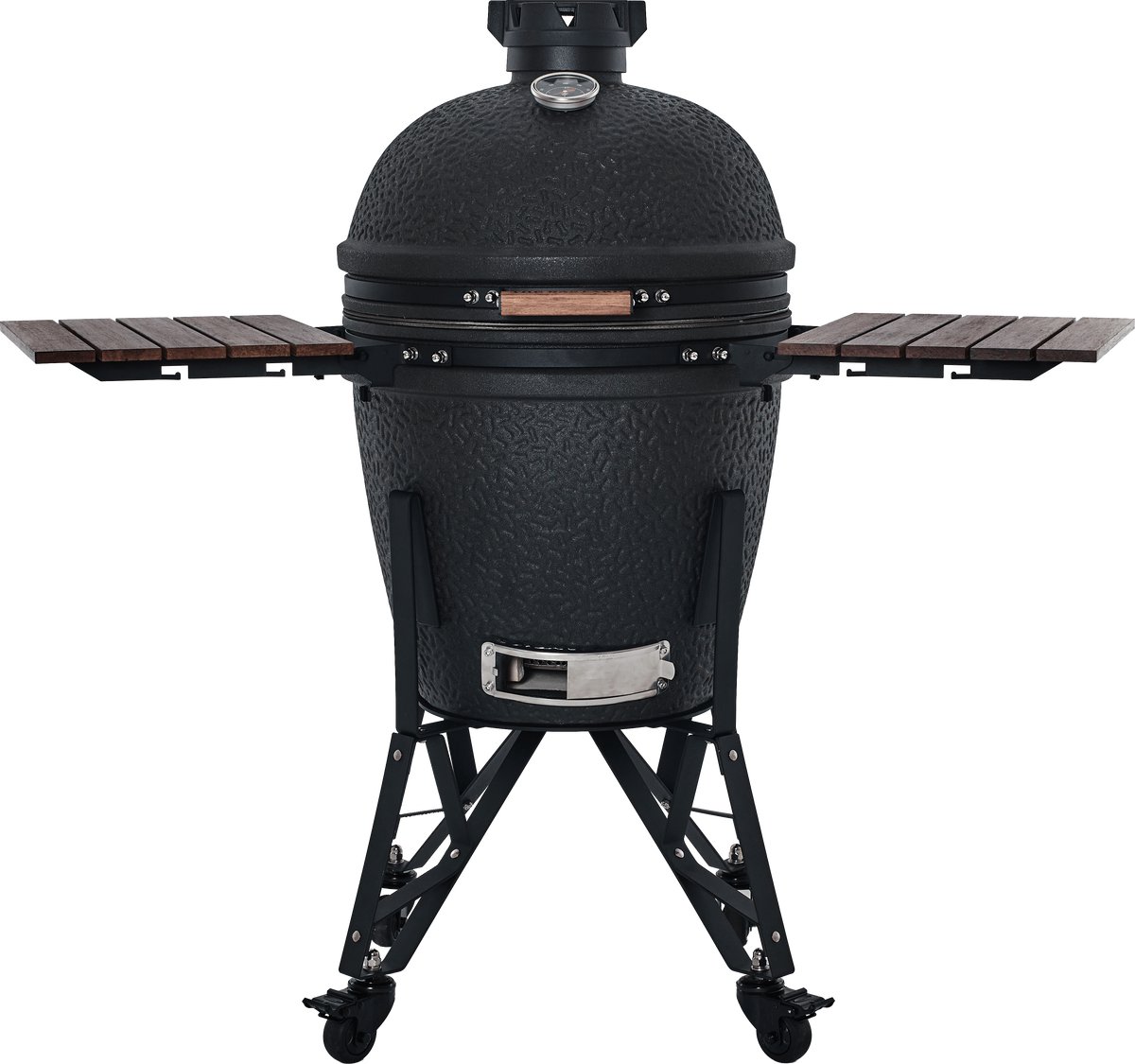
- Complete, “with stand”: frame and usually side shelves.
- Starter Set, Master Set: frame plus accessories, and not always dearer.
- Table Chef, tabletop: meant to stand on something; no frame exists.
The dearest is not always the most complete
This is the illogical part. A Kamado Joe Classic III was listed on bol as a Stand-Alone at 2199 euros and as a starter pack — with more in the box — at 1998. That is not a shop error but a consequence of how stock and promotions run per article number.
It does mean that "find the cheapest version" and "find the bare version" are two different searches, and that you should run both.
What we do about it
We tie every price to the barcode rather than to the model name, and list on each product page which other versions of that model exist, with their own barcodes. So you can see whether the price you found elsewhere is about the same product.
And where a shop does state what is in the box, it goes in the specifications. Where nothing is stated we leave it blank — a guess about that is a guess about what gets delivered to you.