Published on 2 October 2026 · 9 min read
Lighting a kamado: four ways, and one to leave alone
Lighting a kamado is not difficult, but how you do it stays with you longer than it would on an ordinary barbecue. Ceramic is porous: whatever you burn in it to get the fire going can still be coming back out months later. That makes the choice between firelighters, an electric lighter and a gas torch less a matter of taste than it looks, and it makes one method plainly unsuitable. Here is what each costs, what you get for it, and what to watch.
Why ceramic changes the rules
On a steel kettle, whatever you use to light it leaves with the smoke. On a kamado it does not, quite. The wall absorbs, and gives back as soon as it gets hot. A smell you put in there in April is still there in July.
On top of that, you do not light a kamado across its whole width. You light a few spots and let the fire spread from them, because the number of burning points is what decides where your temperature lands. How that works is in charcoal and fire; what matters here is that each method below is different at exactly that.
So you judge a method on three things: does it leave anything in the ceramic, can you light one spot with it rather than ten, and will you have it to hand when you need it.
Firelighters: the standard, and rightly so
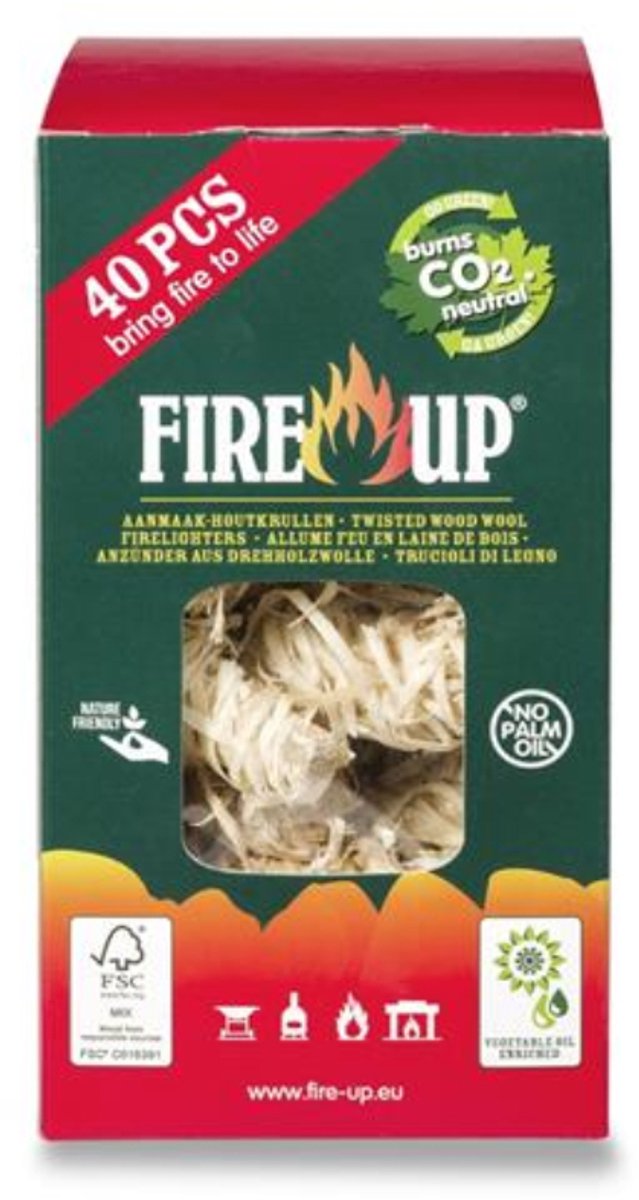
Wood wool soaked in paraffin or vegetable wax. You tuck one or two between the coals, light them, and they burn for two or three minutes with a flame tall enough to get charcoal going.
They leave nothing you can taste, a box costs a few tens and lasts a season, and you need nothing else but a match. For the large majority this is the answer and you can stop reading.
Their drawback is exactly their strength: a firelighter burns out where it lies. Put it between the coals somewhere you did not want it and you cannot take that back, and one sitting too close to its neighbours will set them going too. So you choose your number of points when you lay them, not afterwards.
- Cost: around twenty euros for forty.
- Leaves nothing in the ceramic.
- You pick the spot up front, not along the way.
 LightingFirelighters€16.34View
Electric lighter: hot air instead of a flame
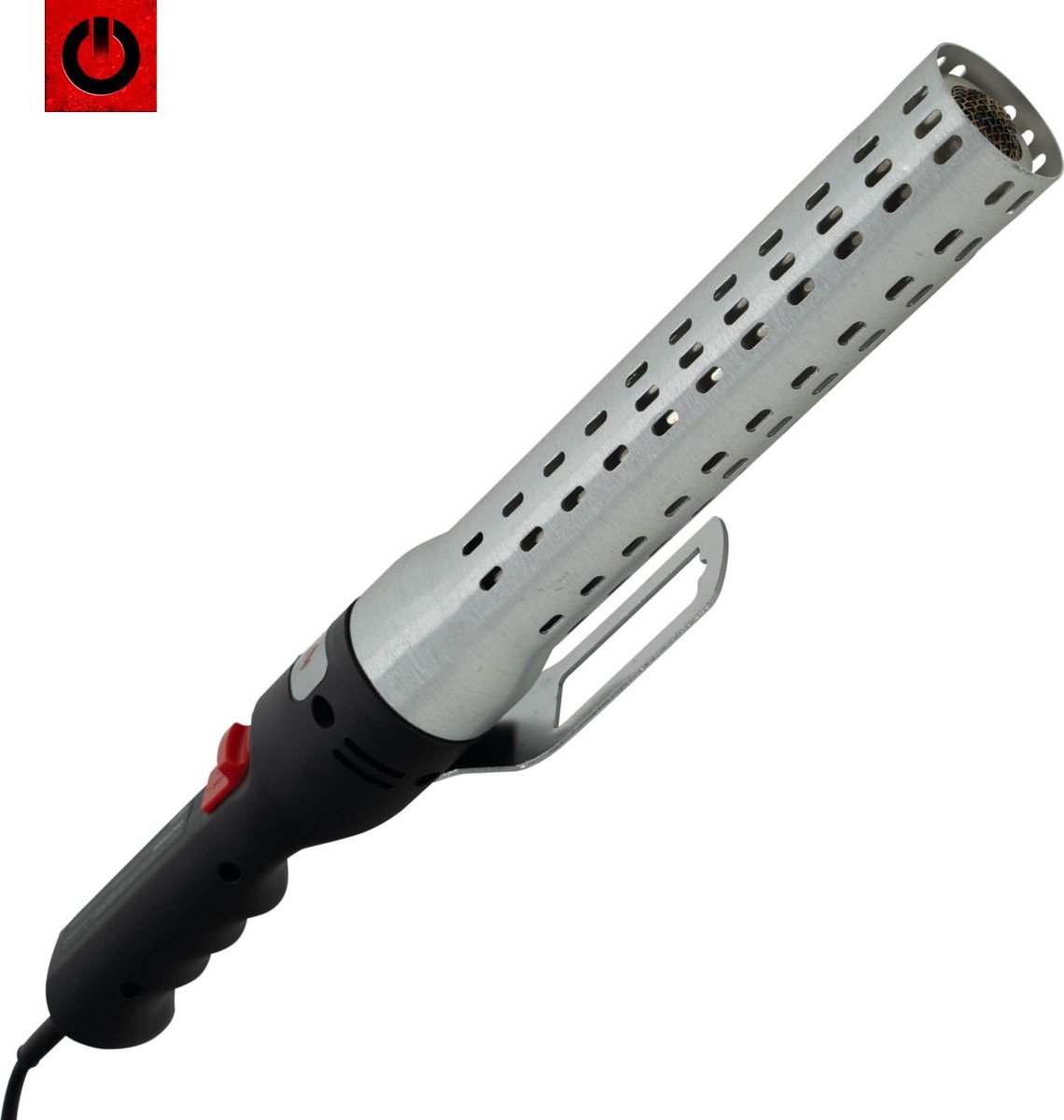
An electric lighter blows air of several hundred degrees at the coals. No flame, no fuel, no firelighter. You hold it on one spot until that spot glows, then take it away.
That last part is the real difference. Where a firelighter makes its own decisions the moment you light it, an electric lighter leaves you at the controls throughout. One point for low and slow means genuinely one point. For anyone who cooks low and long often, that is not a luxury but the difference between arriving at your temperature and sailing past it.
The price is the objection, and the power socket is the real objection. Reckon on four or five times a box of firelighters, and on a lead to wherever the kamado stands. If that is the end of the garden, this is not an option and firelighters are the answer.
- Cost: four to five times a box of firelighters.
- You steer where the fire starts, and can stop.
- Needs mains power where the kamado stands.
 LightingLooftlighter€76.45View
Gas torch: fast, and easily too far
A weed burner or a kitchen butane torch gets charcoal going in half a minute. It works, it leaves nothing behind, and it is the quickest way there is.
The trouble is that it works too quickly. A torch moved along the coals lights a broad strip rather than a point, and then you have a fire that starts bigger than you meant. On a kamado you do not correct that with the vents: ceramic that is warm stays warm.
If you want to do this anyway, hold it still on one spot and count. Move it, and you are lighting by feel, and feel is precisely what a kamado does not forgive.
Lighter fluid: the one real mistake
This is the method that does not belong in a kamado, and it is not a matter of preference. Fluid soaks into the porous ceramic, stays there, and comes back out as soon as the wall gets hot. You taste it not only in the first hour but in later cooks.
There is no way to get it out, either. Burning off at high temperature deals with grease and with smoke flavour, but paraffin-like residues sit deeper than that. A kamado that has had lighter fluid in it remains a kamado that has had lighter fluid in it.
The same goes for petroleum-based lighter cubes. The white blocks that smell of lamp oil belong in a fire pit, not under something you are going to eat. Cubes of wood wool and wax are a different product and are fine.
Paper and cardboard: free, and an ash problem
Paper lights charcoal badly, because it is gone in thirty seconds and gives off little heat while it lasts. But that is not the real objection.
The real objection is what it leaves. Paper and cardboard produce a fly ash lighter than charcoal ash, and that ash travels down and settles in the bottom vent. A kamado that will not hold its temperature has an air problem more often than a fire problem, and this is a way of creating that problem yourself.
The same applies to a handful of briquettes as a starter. Briquettes do not belong in a kamado in the first place, and as a starter they give you exactly the ash you do not want.
Where you light, not only what with
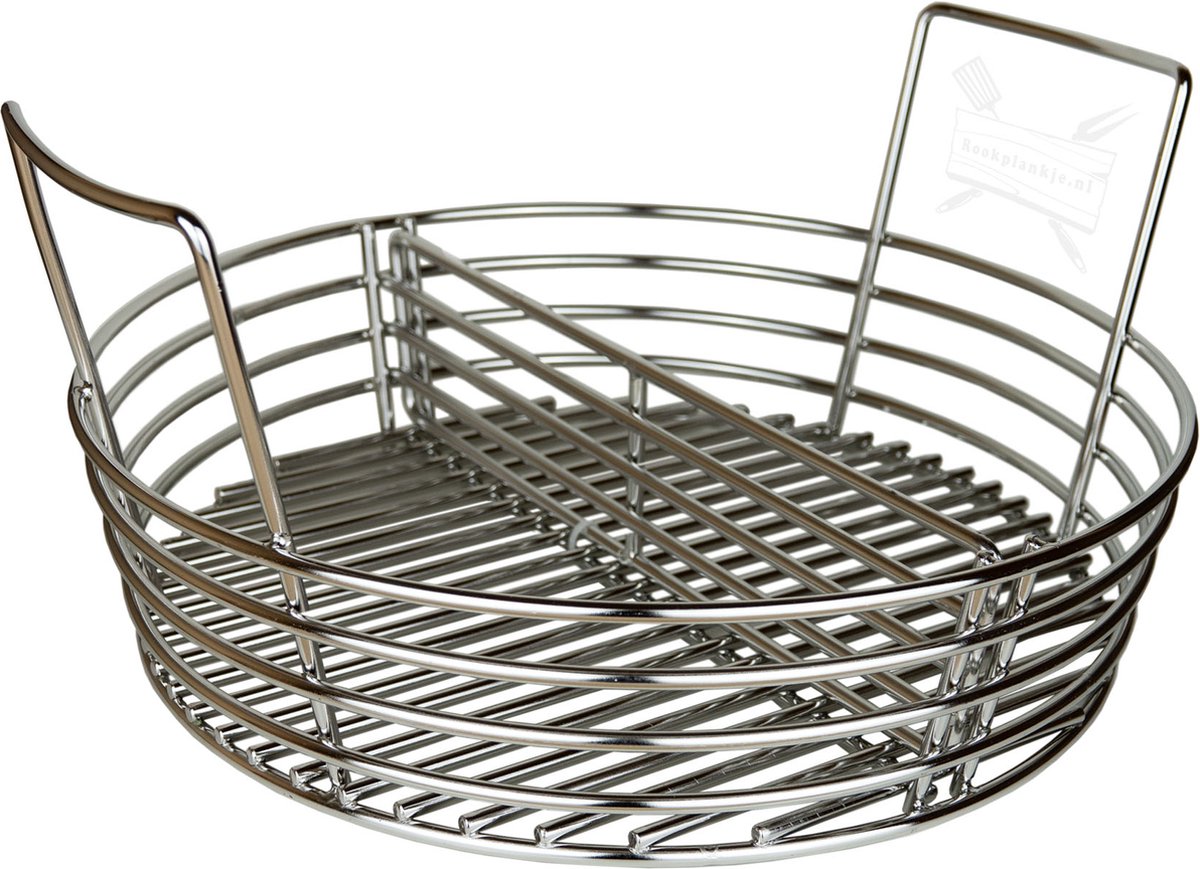
All four methods above get better when the coals are in the right place. A charcoal basket holds them together so your fire spreads predictably instead of creeping through a loose heap.
Fill the kamado full, even for a short cook. What does not burn you put out by closing the vents, and use again next time. Lighting a half-full kamado saves nothing and makes the fire harder to steer.
Light with the lid open and leave it open for ten minutes afterwards. Only once the first coals are properly glowing do you close it and let the temperature climb calmly.
Do’s and don’ts, briefly
Most of what goes wrong when lighting goes wrong in the first ten minutes, or the first time you open it afterwards. Keep to the list below and the rest follows.
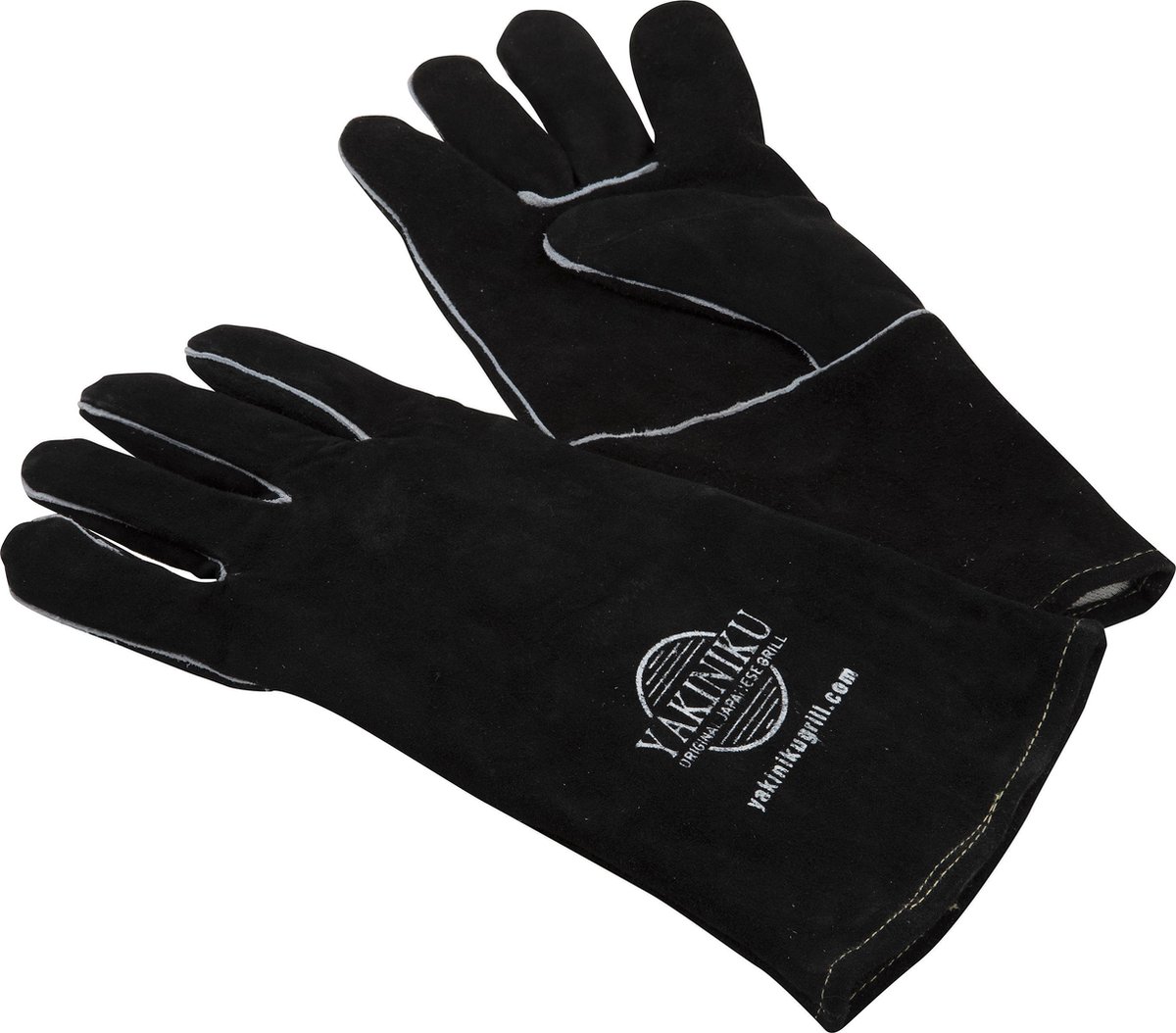
About that opening: a hot dome with the vents shut flashes back the moment it gets air. Lift the lid a couple of centimetres first, wait, and only then open it. Gloves belong with that, and why exactly is explained in charcoal and fire.
- Do: choose your number of points up front, because that is your temperature.
- Do: fill it full and reuse what is left.
- Do: leave the lid open for ten minutes after lighting.
- Do: open a hot kamado on a crack first.
- Avoid: lighter fluid and petroleum-based cubes.
- Avoid: paper, cardboard and briquettes as a starter.
- Avoid: moving a torch back and forth across the coals.
What we would do
Start with firelighters. They are cheap, they work, and they leave nothing behind. Nine people in ten never need anything else, and anyone claiming otherwise is usually selling something.
If you cook weekly, and especially low and long, an electric lighter earns its money back in control rather than in time. That it saves you a minute is the least interesting thing about it; that you can stop lighting whenever you like is the point.
And whatever you choose: nothing liquid. That is the one rule on this page with no exception to it.