Published on 22 September 2026 · 4 min read
What size kamado do you need?
Almost everyone buys one size too big. Not out of ignorance, but because you picture the birthday with sixteen guests rather than the Tuesday evening for two — and that Tuesday evening is what you will actually be doing for years.
Why too big is genuinely worse
A kamado works on a bed of charcoal and the airflow drawn through it. A large kamado with a small bed in it has a dome full of air above that fire, and that air has to come up to temperature too. So you burn longer and use more charcoal to cook the same piece of meat.
Then there is the warm-up. An XL takes half an hour before you can use it, a compact fifteen minutes. That difference decides whether you still light it on a weekday evening, and a barbecue that only comes on at the weekend is an expensive cupboard.
- More charcoal per session, even with one steak on it.
- Longer warm-up, and therefore used less often.
- Heavier, and so harder to move or store.
The sizes, and who they are for
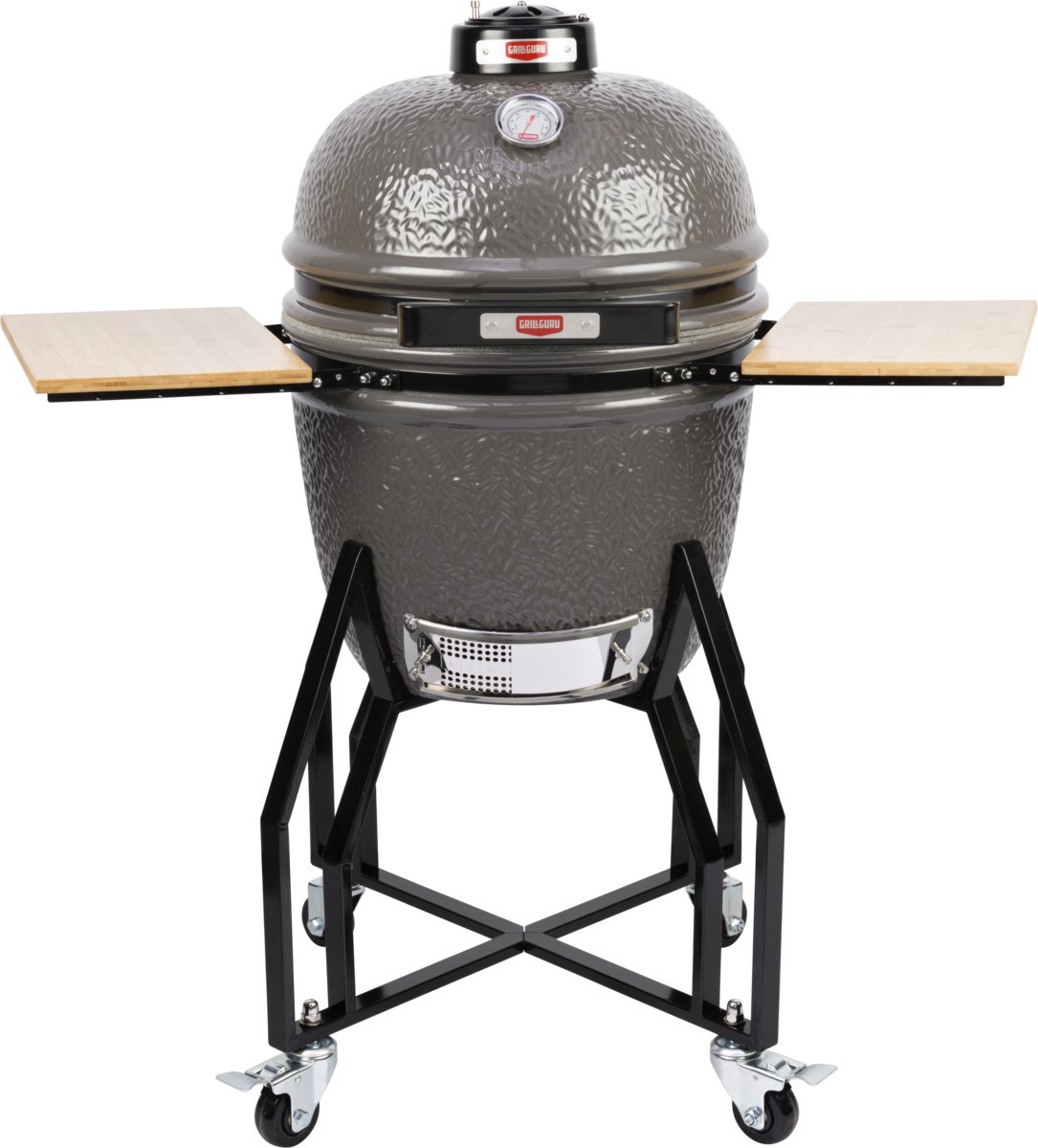
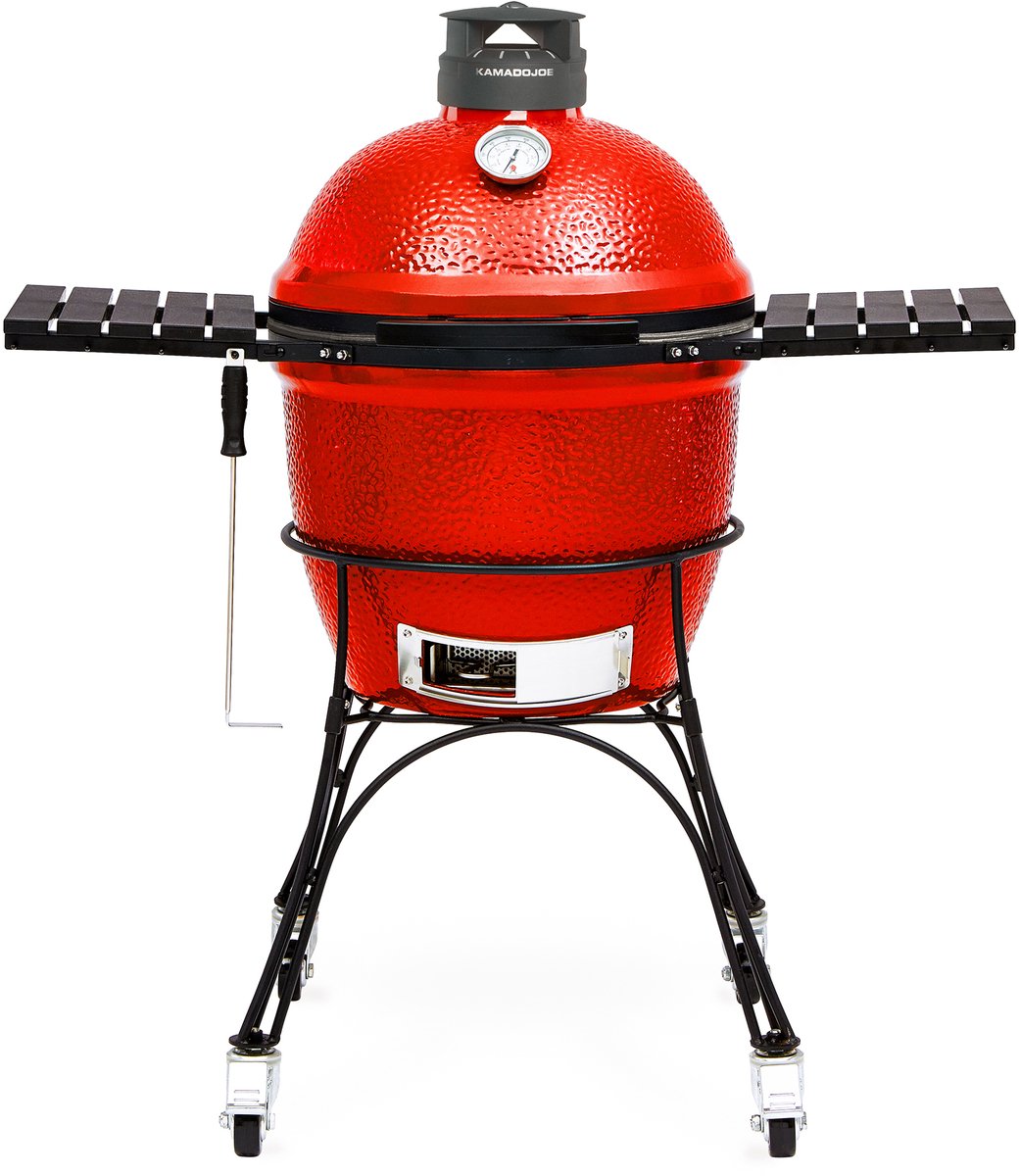
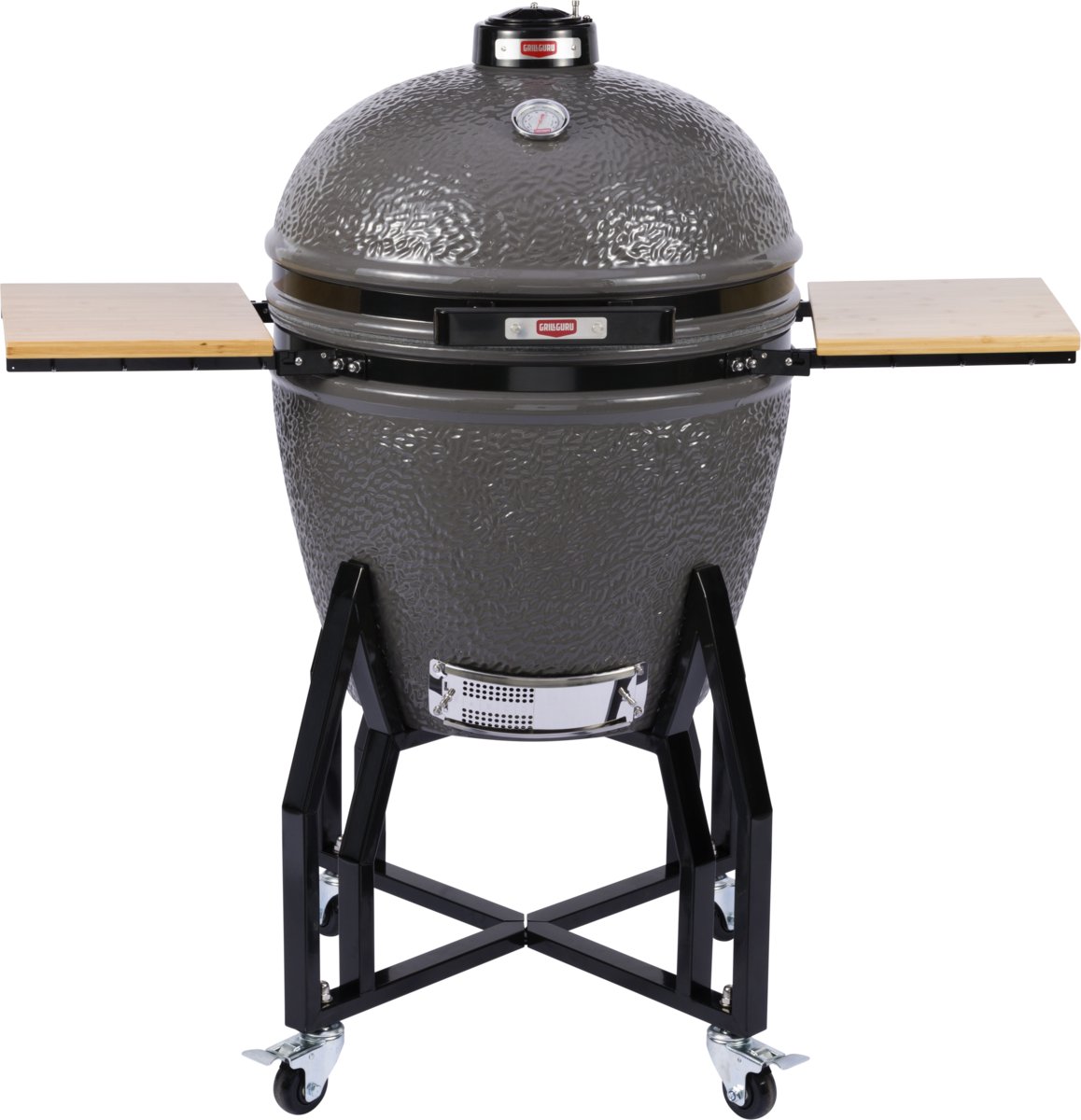
Kamados are sold on the diameter of the grate, and every brand has its own words for it. Compact, Medium, Large, XL, Junior, Classic, Big — it comes down to four classes.
Work from the number of people you normally cook for, not the maximum who will ever turn up. For that once a year you do two rounds on a smaller kamado, and it costs you fifteen minutes.
- Compact (28–34 cm): one or two people, and the only size that travels.
- Medium (around 40 cm): three to four people, ample for a family.
- Large (46–48 cm): four to six, and the size every accessory fits.
- XL (56–61 cm): consistently eight or more, or whole cuts of meat.
Large is the standard, and there is a reason
Forty-six to forty-eight centimetres is what the accessory work is designed around: heat deflectors, grates, multi-level systems and rotisseries are available for this size at every brand. For a compact or an XL the range is narrower and the price per item higher.
It also has the best second-hand market, which matters if you want something else in five years. A Large sells within a week; an XL takes months and half the money.
What size does not decide
How well it smokes, how steady it is and how long it lasts depend on the thickness of the ceramic and on the seal, not on the diameter. A thick Medium holds a low temperature more calmly than a thin XL.
So if budget is tight: take the smaller size of the better brand, not the larger size of the cheaper one. That is almost always the better kamado.